Image Describer•7 min read
Ai That Describes Images: Complete Guide
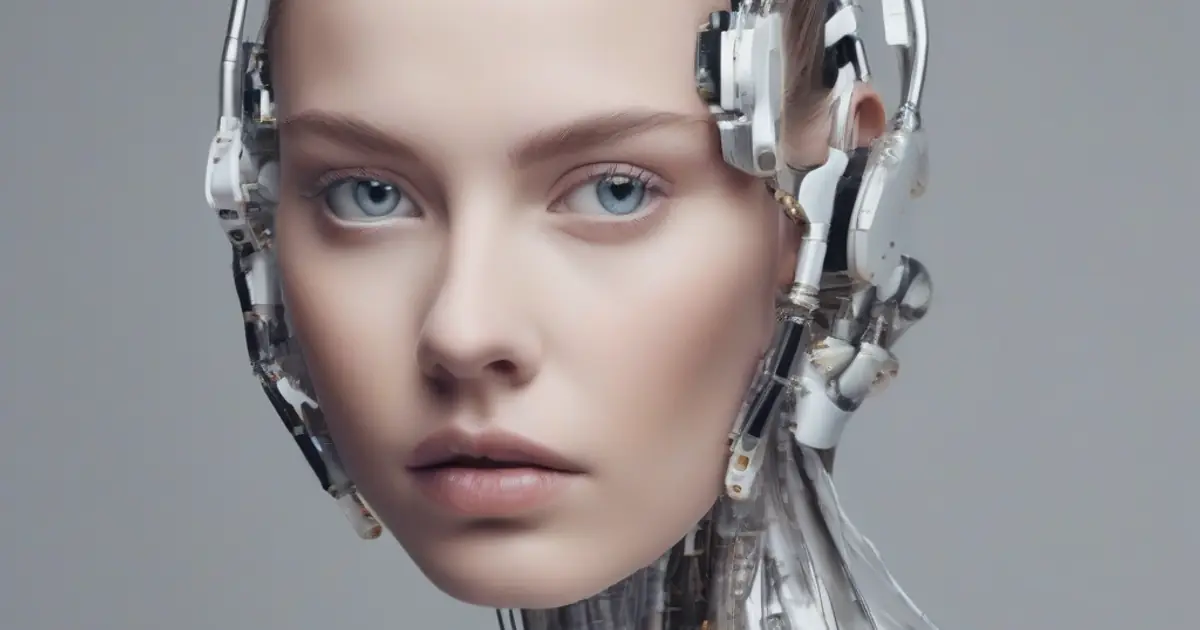
# How AI That Describes Images is Actually Changing How We See the World
You know that little voice in your head when you look at a photo? The one that says, "That's a beautiful sunset," or "Wow, that dog looks guilty"? Imagine if that voice wasn't just in your head, but could be summoned for any picture, anywhere. That's not sci-fi anymore. It's the reality of ai that describes images, and it's quietly becoming one of the most useful tools in our pockets.
What started as a simple tool for alt-text is now an everyday assistant. It's reshaping how blind users experience the internet. It's helping marketers create content faster. Honestly, it's not just listing objects anymore—it's building a story from pixels. And from what I've seen, we're just getting started.
From Pixels to Prose: How This AI Really Works
So, how does code look at a JPEG and say it's "a serene lakeside cabin at dusk"? It feels like magic, but it's actually a two-part process. You can't have one without the other.
Think of it like this: first, the AI has to see. Then, it has to speak.
The Vision Part: Teaching AI to "See"
This is where computer vision comes in. Systems don't "see" like we do. They break an image into a grid of pixels and hunt for patterns. The tools here are usually Convolutional Neural Networks (CNNs) or Vision Transformers.
These models get trained on hundreds of millions of labeled images. Sometimes *billions*. Through this, they learn to spot edges, shapes, and textures. Eventually, they recognize full objects. Is that a collection of curves and fur? That's a "dog." Are those vertical lines with crossbars? That's a "ladder."
They get really good at it. Not just objects ("car"), but details ("red, vintage car"), scenes ("busy city street"), and even emotions ("a woman laughing").
But here's the thing: on its own, this part just makes a messy list of labels. It's a data dump. Not a description.
The Language Part: From Labels to Stories
This is where the useful magic happens. The raw visual data—"dog, frisbee, grass, person, running"—gets sent to a Large Language Model (LLM). You know, the tech behind chatbots.
The LLM's job isn't to see. It's to *understand context* and *build sentences*. It takes that jumble and asks: What's happening here? Is the dog chasing the frisbee? Is the person throwing it? What's the most natural way to describe this?
The best ai that describes images doesn't just list. It puts things together. It might say: "A golden retriever leaps through the air in a grassy park, catching a red frisbee as a person watches and smiles." It turns detection into a narrative.
Way More Than Alt-Text: Where This Tech Actually Matters
Okay, cool tech. But who cares? You should, because this is moving out of the lab. It's changing real workflows and lives right now. It's way bigger than automated alt-text.
Empowering Accessibility and Inclusion
This is, for me, the most important use. For visually impaired users, the digital world can be a wall of silence. Screen readers can't interpret a photo. An ai that describes images acts as a real-time narrator. It gives the context sighted people just get.
Is that image in a news article a graph, a protest, or a celebrity photo? Now, a tool can tell you. It makes social media, news sites, and online shops genuinely accessible. Look, it's not a perfect replacement for a thoughtful human description. But it's a massive leap forward. And it's available 24/7.
If you're trying to implement this for accessibility, I’d recommend checking out The Ultimate Guide to AI Image Describers. It goes deeper on features and what actually works.
Supercharging Content Creation and SEO
Here’s where the business case gets obvious. Imagine you're a social media manager with 50 product photos to post. Writing unique captions for each one? That's a huge time sink. An ai that describes images can give you a first draft in seconds.
It can suggest hashtags based on what's in the photo. It can write product descriptions from a simple image. It creates metadata that helps Google understand your pictures. Honestly, this isn't about replacing creativity. It's about killing the grunt work. You get a solid starting point, then you add your own personality.
For content folks who want to see this in action, AI Picture Describer: Your New Secret Weapon for Visuals breaks down some powerful real uses.
Unlocking Visual Data for Business and Research
The uses here are everywhere. In online retail, AI can auto-tag thousands of product images. Attributes like "striped," "long-sleeve," or "ceramic" make inventory searchable in new ways. Security systems can do more than detect motion. They can describe a scene: "Two people approaching a secured door after hours."
Researchers use it to analyze satellite photos. They track deforestation or city growth. Medical teams are testing it to give preliminary notes on scans—with a ton of human oversight, of course. It's a force multiplier for any field drowning in pictures and videos.
Picking Your Tool: What to Look for in an AI Image Describer
Not all image describers are the same. You're not just buying a feature. You're choosing a narrator. Here’s what separates the good from the great.
Accuracy and Context: What Actually Matters
Anyone can build a tool that says "cat, tree." The best ai that describes images understands the story. Does it get that the cat is *hiding* in the tree, not just near it? Does it know a historical monument from a generic building? Can it guess the mood?
Look for tools that care about context more than list length. You want a description a human would find useful. Not just technically correct. I’ve been impressed with tools that focus on this nuance, like the one in Image Describer AI: The Tool That Actually Gets Your Pictures.
Speed, Cost, and How It Fits In Your Work
The practical stuff matters. A lot. Are you doing one image at a time on a website? Or do you need an API that can handle 10,000 images an hour? Cost models are all over the place—some are subscriptions, others charge per image.
Think about where you need the descriptions. Right in your CMS? Inside your social media scheduler? Make sure the tool fits into your existing workflow. It shouldn't create more work for you.
The Future of Sight: Where This Tech is Going Next
We're in the early chapters of this story. The technology keeps moving, and what it means for us is getting more complex.
From Description to Meaning and Stories
The next step is moving from *what is* to *what it means*. We'll see AI that doesn't just describe a family photo but says it's a "joyful birthday celebration." It might make up a short, creative story based on a fantasy painting. Reading emotions ("this image feels lonely") and guessing intent ("this photo is meant to show off a product's design") are coming soon.
The line between description and creative interpretation is going to blur. A lot.
Dealing With the Ethical Stuff
This power has real problems. The bias in training data is a huge issue. If an AI is mostly trained on Western photos, how well does it describe traditional clothing from another culture? It might just use stereotypes.
Privacy is another minefield. Should an AI be allowed to describe personal photos you haven't uploaded? The potential for misuse in surveillance is obvious. And honestly, it's scary.
That's why human oversight isn't optional. Especially for sensitive stuff. We need to build these tools carefully. For a balanced take on this, The Image Describer: Your Essential Guide to AI-Powered Visual Narration has a great discussion on using it the right way.
Wrapping Up: A New Way of Seeing
Look, the ai that describes images is more than a neat trick. It's becoming a basic bridge—between the visual and the verbal, between people who can see and people who can't, between raw data and real understanding. It sparks creativity. And it's a must-have for inclusion.
Its evolution makes us think differently about sight itself. What does it mean to "see" something? Is it just registering light? Or is it building a meaningful story from it?
As this tech improves, it won't just describe our world. It will help us understand it in new ways. It'll show us patterns and stories we missed. Honestly, that's pretty exciting.
If you're ready to try it, a great place to start is Unlocking Visual Stories: Your Complete Guide to AI Image Describers. The view from here? It's only going to get more interesting.
E
Editorial Team
Content Writer
You Might Also Like

How to Describe Images with AI: A Practical Guide
Learn how to describe images with AI in this practical guide — see how tools work, why they matter, and how to get accurate results every time.
Read More
Ai That Describes Images: How 2026
Discover how AI that describes images is changing how we see the world — learn what it can interpret and why it matters now.
Read More
Ai Picture Describer: Your Complete Guide
ai picture describer: You know the feeling. You’re staring at a photo—maybe it’s a detailed chart, a messy desk that looks oddly artistic, or a candid s...
Read More