Abstract Chrome Geometry
AI prompt extraction analysis for Abstract Chrome Geometry
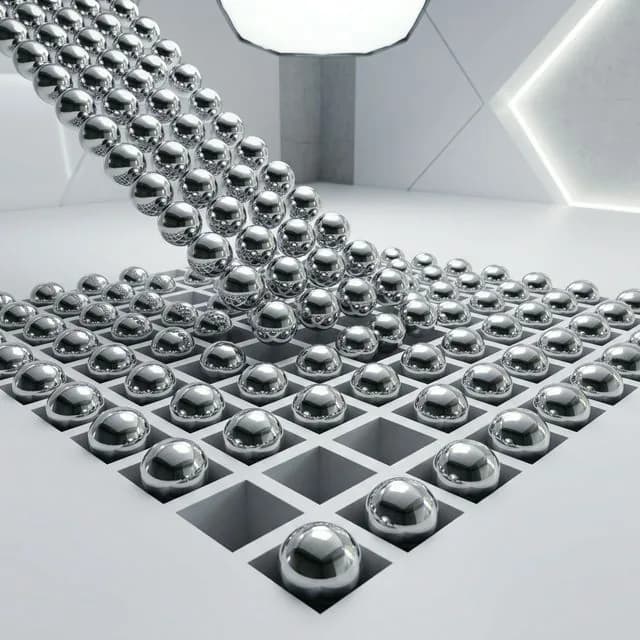
Extracted Prompt Formula
Oddly satisfying 3D rendering of highly reflective chrome spheres falling perfectly into a precise geometric grid, raytraced reflections, pristine lighting, minimal abstract composition.
Core Variables
- reflective chrome spheres
- precise geometric grid
- falling mechanics
Detected Parameters
Raytraced reflections, highly satisfying, mathematically perfect geometry
About this AI Generated Image Prompt
Mirror surfaces have no colour of their own; they show only what surrounds them, and that fact governs what this prompt controls and what it leaves to chance. Highly reflective chrome, raytraced reflections and pristine lighting are all named, but the environment the spheres sit in is not, and a raytracer needs something to bounce. With no surroundings given, the model has to invent them, and whatever it invents is what every sphere will show. The metal is only as interesting as the room it stands in, which is why prompts written this way tend to produce soft, low-contrast reflections rather than the hard mirror people picture when they type the word chrome. Falling perfectly into a precise geometric grid also asks for motion and repose at once, and a still frame can only show one. The compromise is usually a frozen instant: spheres suspended mid-drop, spacing already regular, no motion blur since none was requested. The oddly satisfying tag pulls the same way, because it is a category borrowed from looping video, where the satisfaction comes from timing. Stripped of time, it survives as symmetry and even spacing, so it steers composition rather than surface. Pristine lighting suppresses grain, flare and colour cast, and minimal abstract composition clears the background, but neither says anything about direction. With chrome, direction is the whole image: one hard source gives each sphere a single bright specular pip and a long gradient falling away from it, while broad diffuse light produces the flat, even sheen this wording will most likely deliver. No aspect ratio is set and no camera angle either, so how steeply the grid recedes is left open as well. The highest-leverage edit is to give the mirrors something worth mirroring. Swap pristine lighting for something like lit by one large window against a black-and-white striped backdrop. Those stripes wrap each sphere as curved bands that compress toward its edges, turning every ball into a readable lens instead of a featureless blob, and the way the band pattern shifts from row to row will describe the grid's depth without a single word of camera language.
Want to reverse-engineer a look like this from your own image? Try the free Image to Prompt tool to pull an editable prompt from any picture in seconds.
Want to extract prompts like this?
Try the AI Image DescriberRelated AI Prompts
Explore more extracted prompt formulas from our gallery.

Abstract Colorful Flow
Clean vector linework, high contrast, smooth gradients, sharp neon edges
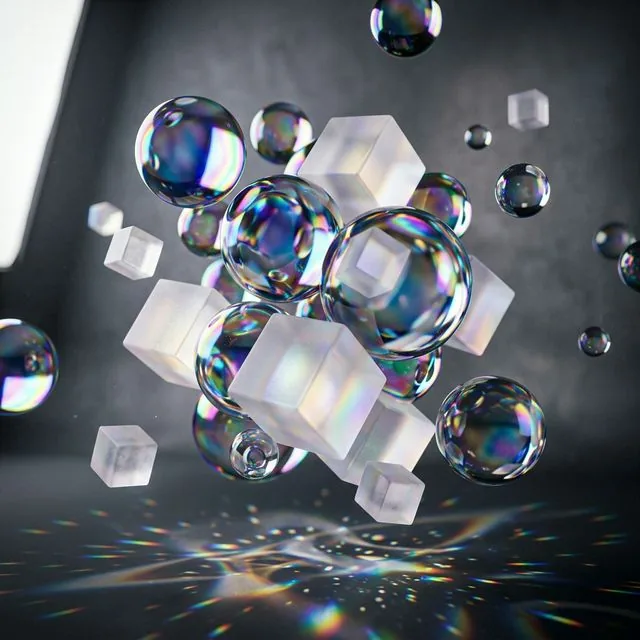
Abstract Glass Geometry
Photorealistic glass materials, caustics, pristine lighting, 8k resolution
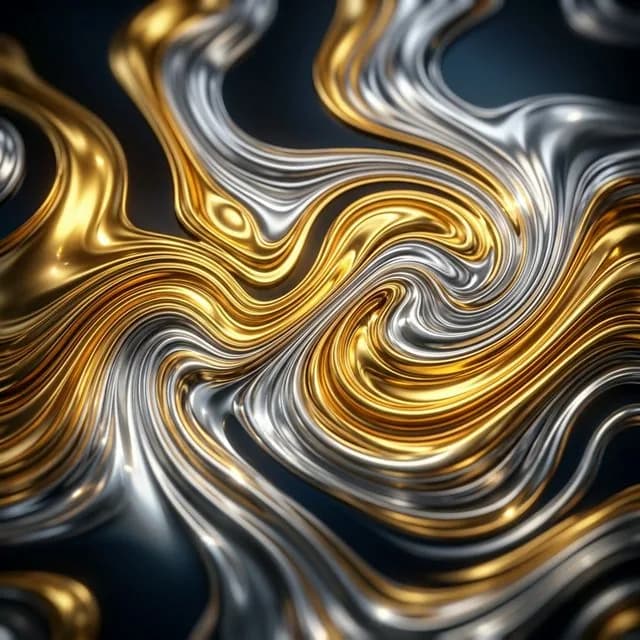
Abstract Liquid Gold
Ultra premium rendering, glossy reflections, liquid dynamics, 8k