Cosmic Space Whale
AI prompt extraction analysis for Cosmic Space Whale
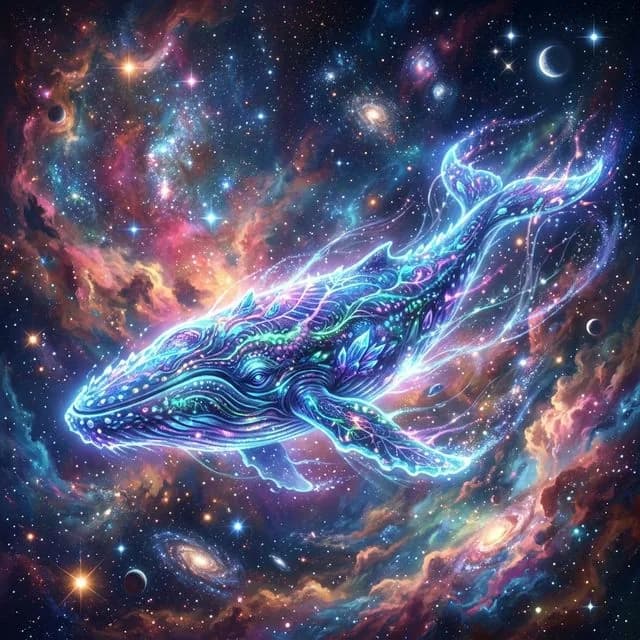
Extracted Prompt Formula
Surreal digital painting of a giant glowing bioluminescent whale swimming majestically through a vibrant cosmic nebula and starfields, ethereal glowing space dust, highly detailed concept art.
Core Variables
- glowing bioluminescent whale
- cosmic nebula
- space dust
Detected Parameters
Surreal concept art, majestic scale, ethereal lighting, vibrant colors
About this AI Generated Image Prompt
Scale is the one thing this prompt asks for and does not supply. Giant is a comparative word, and nothing in the described frame offers a comparison. A nebula has no fixed apparent size, starfields have none, and a whale in isolation simply reads as a whale. Without a reference object the image tends to come back looking like a normal-sized animal in front of a painted backdrop rather than something enormous crossing a void. A single small object of known size, placed near the body, does more for the sense of scale than any adjective can. The lighting logic has a similar gap. Bioluminescence is emission, and emission only reads as glow when it is surrounded by something darker, because perceived brightness is relative rather than absolute. This prompt asks for a glowing whale, a vibrant nebula and ethereal glowing space dust all at once, which puts subject and background at similar luminance and cancels the effect. The whale ends up bright but not luminous. The fix is to darken the near field around the animal so its own light is the brightest thing present, and to let that light land somewhere, since gas illuminated where the whale passes proves it is the source far more convincingly than an outline of glow. One choice deserves credit. The prompt calls itself a surreal digital painting and concept art, and it adds no lens, aperture or render-engine language. That consistency matters: stacking photographic and CG vocabulary onto a painting produces a muddled surface, half brushwork and half render, and this avoids it entirely. Majestically and highly detailed are soft tokens by comparison, and the second mostly raises surface incident on the whale itself, skin folds and fine texture across the body, rather than doing anything for the frame as a whole. Composition is never addressed at all, and neither is aspect ratio, so both are left to the model. For a version that repairs both problems at once, add a lone lit spacecraft near the flukes, no longer than a pectoral fin, and specify a dark dust lane behind the whale's back. The ship gives the eye a known quantity to measure against, so the animal reads as kilometres long, and the dark lane gives the bioluminescence a black backdrop, so the glow finally behaves like a light source instead of a colour.
Want to reverse-engineer a look like this from your own image? Try the free Image to Prompt tool to pull an editable prompt from any picture in seconds.
Want to extract prompts like this?
Try the AI Image DescriberRelated AI Prompts
Explore more extracted prompt formulas from our gallery.
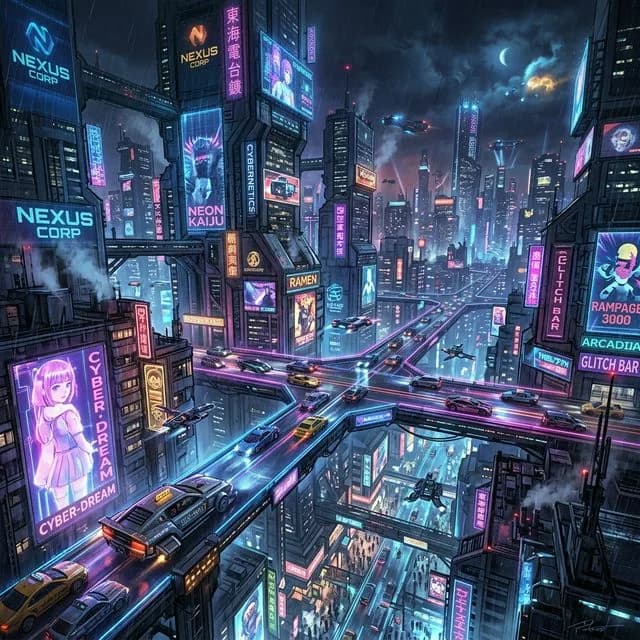
Cyber Cityscape Illustration
Intricate architectural details, cinematic lighting, neon contrast
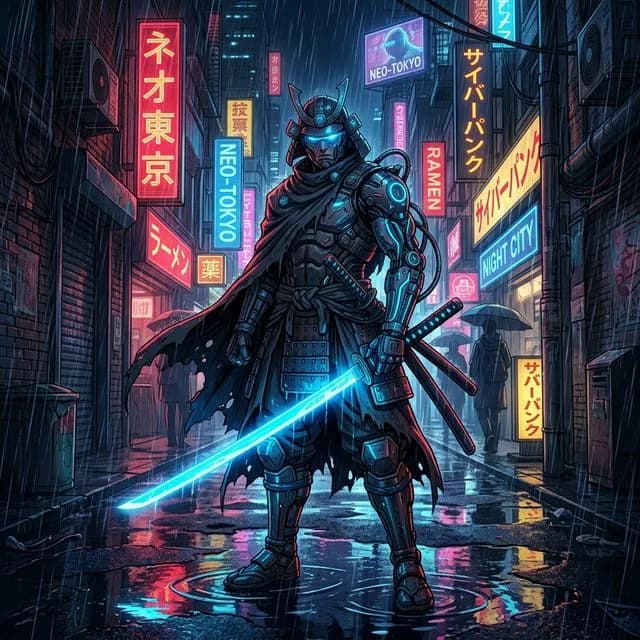
Cyberpunk Samurai Katana
Cyberpunk anime aesthetic, cinematic rain drops, heavy neon reflections
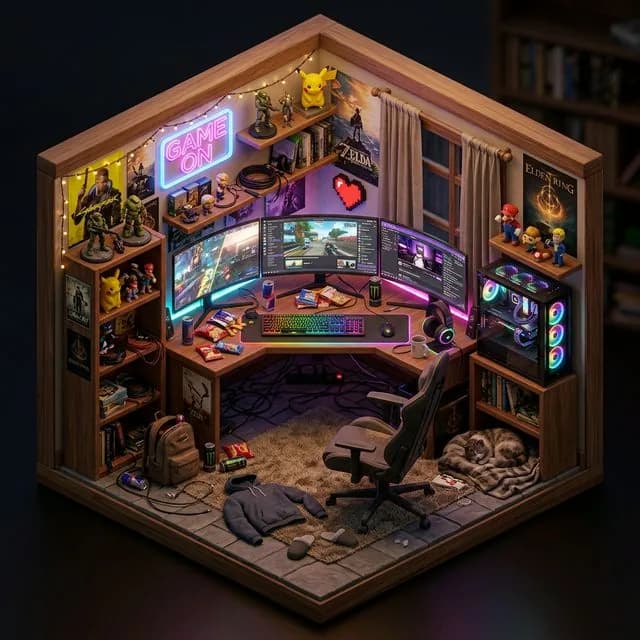
Gamer Room Diorama
Micro-detailed diorama, soft shadows, warm and cool light balance