Gothic Library Dreamscape: Dark Academia Vibes
AI prompt extraction analysis for Gothic Library Dreamscape: Dark Academia Vibes
Extracted Prompt Formula
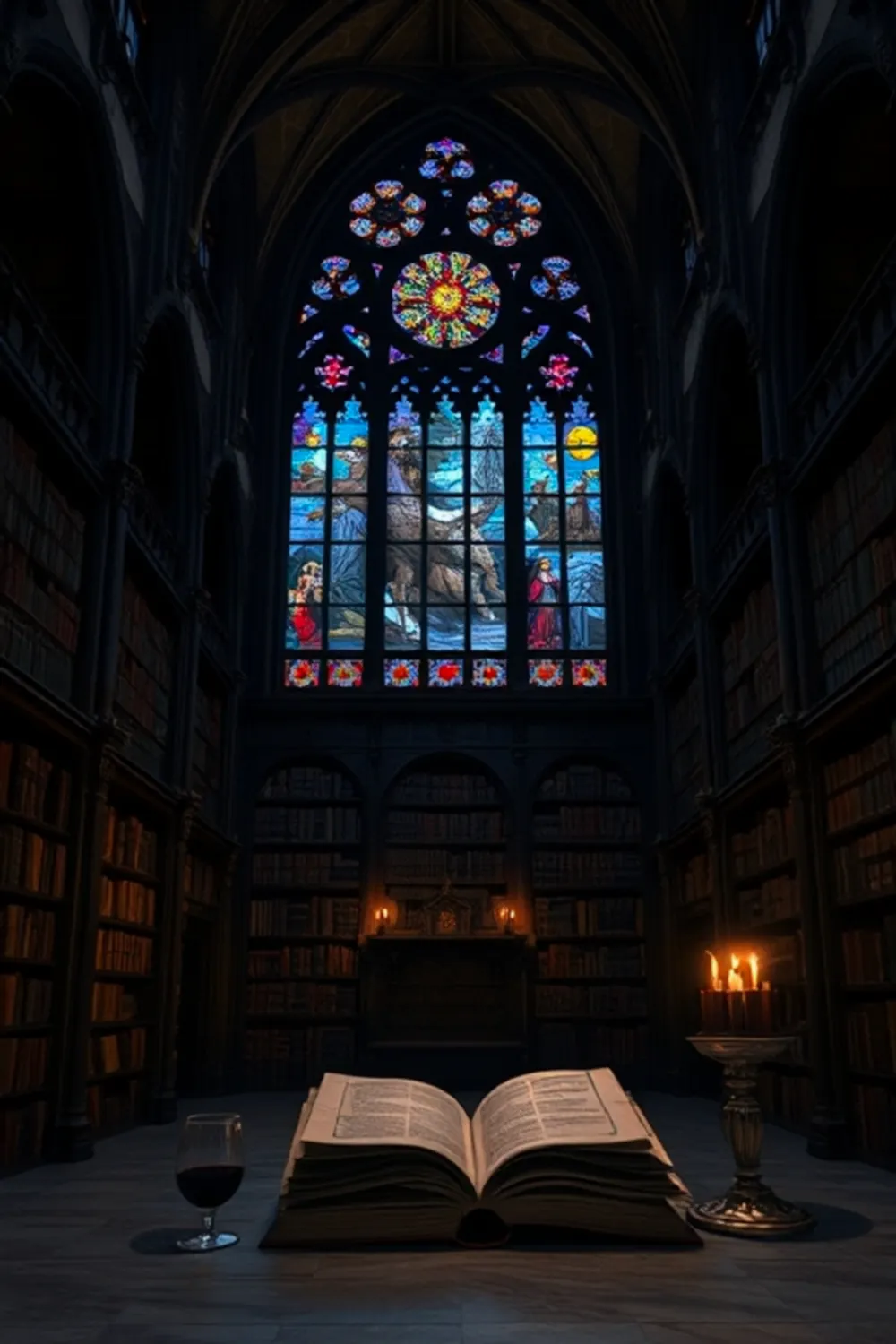
A breathtaking, hyper-detailed interior of an ancient Gothic library at twilight, towering arches of dark oak and stone, intricate ribbed vaults and flying buttresses, shelves crammed with worn leather-bound books, a massive stained glass window depicting a celestial atlas, casting deep sapphire and ruby colored volumetric light onto a marble floor, a single flickering candelabra illuminating a dusty reading desk with an open grimoire, an antique astrolabe, and a glass of deep red wine, atmosphere thick with floating dust motes and a sense of forgotten wisdom, shot on 8K medium format film, Unreal Engine 5 cinematic, volumetric lighting, ray tracing, dramatic chiaroscuro, sharp focus on the book, shallow depth of field, f/1.4 lens, wide angle composition looking up through the arches, intricate textures of moldering leather and gilded pages, award-winning photography, moody and evocative, dark academia aesthetic, Pinterest viral. --ar 2:3
Core Variables
Detected Parameters
About this AI Generated Image Prompt
Two instructions here point the camera at different subjects, and only one can win. "Wide angle composition looking up through the arches" puts the lens low and tilted toward the vaulting, with the ceiling filling most of a 2:3 frame. "Sharp focus on the book" makes an open grimoire on a desk the subject. From a low up-angle that desk is either out of frame or a foreshortened sliver along the bottom edge, so the model has to choose, and the choice changes run to run. Decide which picture you are making: keep the up-angle and let the stained glass be the focal point, or drop to desk height and let the arches go soft above. "Shot on 8K medium format film" is a category error worth catching, because it changes what gets reached for. Film has grain and a particular highlight roll-off; it has no K rating. Bolting a digital resolution onto an analogue medium and then adding "Unreal Engine 5 cinematic" leaves three rendering models to average. The negative prompt is unusually smart about this, blocking "3D render looking fake" and "plastic textures" as a deliberate counterweight to the engine names above. It is the one place where the two halves cooperate on purpose. The sapphire-and-ruby window is the distinguishing choice, and a good one. Those hues sit far apart on the wheel and on opposite sides of the warm-cool divide, so where they land on marble you get a real temperature split rather than the analogous wash a blue-green-purple scheme produces. Ruby also rhymes with the glass of wine, giving the warm accent two placements at different depths, which is how a colour starts reading as intentional rather than decorative. Elsewhere the negative fights itself: it bans "cluttered" and "chaotic" while the positive asks for shelves crammed with books and air thick with dust, then bans "empty" and "sterile" as well, vetoing both ends of the density scale at once. The cleanest fix is to commit to the desk: "eye-level, 50mm, f/2.8, focus on the open grimoire, arches falling out of the top of frame." At f/2.8 rather than f/1.4 the astrolabe and the wine glass stay legible beside the book instead of dissolving, and cutting "cluttered" from the negative finally lets the crammed shelves you asked for arrive.
Want to reverse-engineer a look like this from your own image? Try the free Image to Prompt tool to pull an editable prompt from any picture in seconds.
Want to extract prompts like this?
Try the AI Image DescriberRelated AI Prompts
Explore more extracted prompt formulas from our gallery.