Isometric Micro World
AI prompt extraction analysis for Isometric Micro World
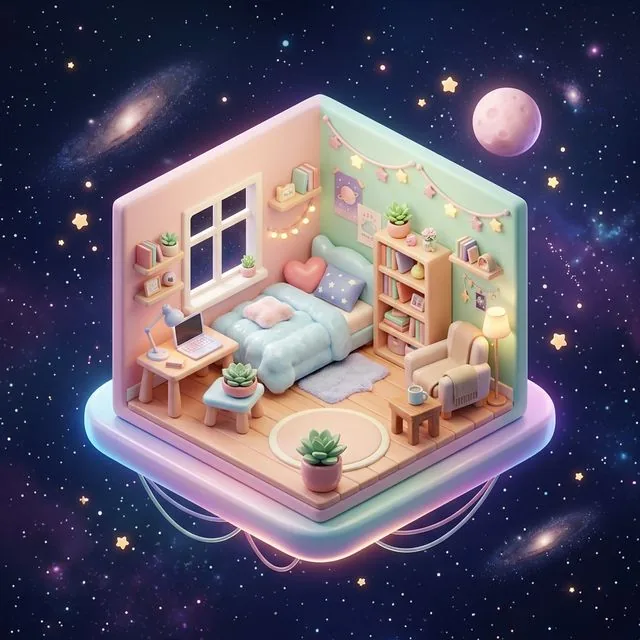
Extracted Prompt Formula
Cute 3D isometric stylized tiny room floating in space, glossy textures, octane render, soft clay materials, pastel colors, cute modern furniture, cozy lighting.
Core Variables
- isometric tiny room
- soft clay materials
- pastel colors
Detected Parameters
Octane render, global illumination, raytraced reflections, high poly
About this AI Generated Image Prompt
Glossy and clay are not the same material, and asking for both is the central problem here. Clay is diffuse: light enters the surface, scatters beneath it and returns softened, with no sharp specular. Gloss is the opposite, a hard mirror-like layer sitting on top. A model handed both averages them into waxy plastic, the finish that makes so much stylised 3D look cheap. Choose one. "Soft clay with subsurface scattering, matte finish" gives the handmade plasticine look; "vinyl toy finish, tight specular highlights" gives the glossy one; together they give neither. The isometric instruction is more precise than it sounds. True isometric is an orthographic projection: parallel lines stay parallel, nothing converges, and an object's size does not change with distance from the viewer. That is why the far wall of an isometric room is exactly as tall as the near one, and why the whole thing reads as a diagram or a toy rather than a photograph. Diffusion models mostly deliver a near-isometric perspective instead, with a faint vanishing point that makes the geometry feel slightly wrong without announcing itself. Adding "orthographic projection, no perspective convergence" tightens that up. Two things go unsaid. There is no wall configuration, and the cutaway convention is two walls plus a floor, which is the only reason you can see inside at all; without stating it you get closed boxes and floating floors in roughly equal measure. And "cozy lighting" names a feeling rather than a source. For a room hanging in space the light question is the interesting one, because there is no environment to bounce anything back. The void supplies no fill, so an unlit side goes fully black unless you say otherwise, and octane render will happily give you that physically correct emptiness. That is where the adaptation lives. Try "two-wall cutaway, warm 3000K key from a window on the left, dim cool fill from the surrounding void." The warm key does the cosy work the prompt only gestures at, and it sits comfortably with the pastel palette already named, while the cool fill along the shadow side is what sells the room as a solid object suspended in space rather than a render pasted onto a dark background. It is the same trick a studio photographer uses to keep a white product from disappearing into black.
Want to reverse-engineer a look like this from your own image? Try the free Image to Prompt tool to pull an editable prompt from any picture in seconds.
Want to extract prompts like this?
Try the AI Image DescriberRelated AI Prompts
Explore more extracted prompt formulas from our gallery.
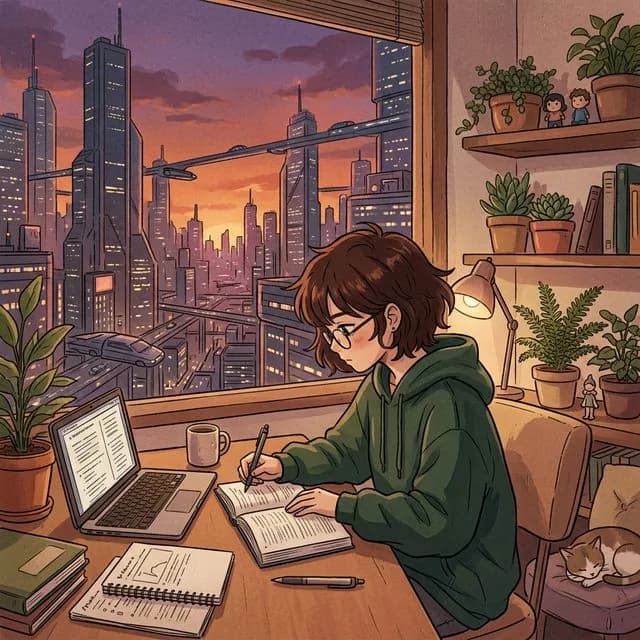
Lo-Fi Study Aesthetic
Warm color grading, relaxed atmosphere, detailed room environment

Low Poly Mountain River
Low polygon 3D art, flat shading, soft pastel sunset lighting

Macro Dew Drops
F/1.8 aperture, extreme sharp focus on subject, natural morning light