Surreal Monument Architecture
AI prompt extraction analysis for Surreal Monument Architecture
Extracted Prompt Formula
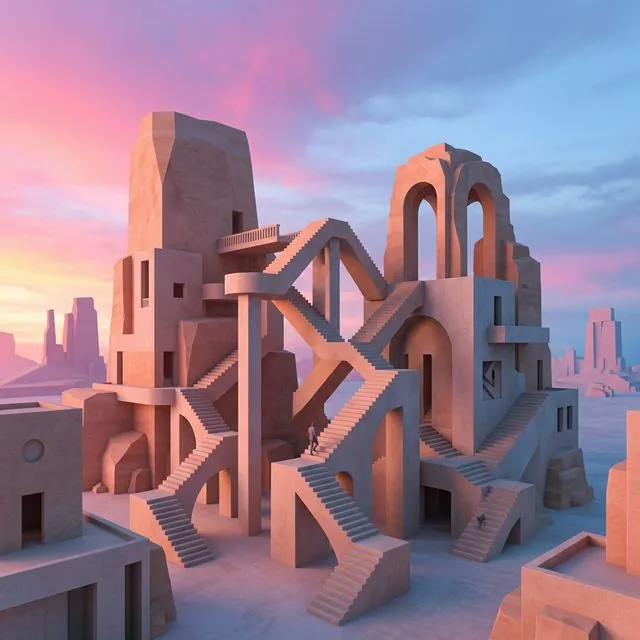
Monument Valley inspired 3D architecture, impossible geometry staircases, soft pink and blue atmospheric lighting, clean minimalist 3D rendering, ethereal optical illusion.
Core Variables
- impossible staircases
- soft pink lighting
- minimalist architecture
Detected Parameters
Clean global illumination, soft shadows, pristine surfaces, surreal style
About this AI Generated Image Prompt
Projection is the missing instruction, and in this style it matters more than palette, lighting or subject. The staircase illusions being reached for, paths that meet where they cannot and steps that climb into their own base, depend on a camera that removes perspective. Under orthographic or isometric projection, parallel lines stay parallel and objects do not shrink with distance, so two edges at different depths can be made to touch on screen. Restore a normal perspective camera and the joint separates, the trick collapses, and you are left with ordinary stairs at odd angles. The prompt asks for 'impossible geometry staircases' and an 'ethereal optical illusion' but never names the projection that makes either possible, which is why results in this style vary so wildly. Adding 'orthographic projection, no perspective convergence, camera fixed at a 45-degree isometric angle' is the highest-value edit available. The lighting vagueness, by contrast, is accidentally correct. 'Soft pink and blue atmospheric lighting' specifies no direction, which would normally be a fault; here, low-contrast and nearly directionless light is what you want, because strong directional shading is itself a depth cue. A hard shadow falling across an impossible junction tells the eye which surface is genuinely nearer and destroys the ambiguity the image exists for. The pastel pair also does real separation work, warm pink on one plane and cool blue on another, letting adjacent faces read as distinct without any shadow at all. That technique comes straight from flat-shaded 3D: use hue to separate planes when value cannot. 'Clean minimalist 3D rendering' serves the same goal by stripping texture. Grain, wear and material detail all carry depth information, whereas a matte untextured surface gives the eye nothing to triangulate with. To adapt without breaking the illusion, keep the projection and change what the geometry is made of: 'pale terracotta and sea-green matte surfaces, thin ambient occlusion in the inside corners only, no cast shadows'. Corner darkening keeps edges legible so the forms do not dissolve into flat colour, while the absence of cast shadows preserves the ambiguity. You end up with architecture that is perfectly readable and still refuses to resolve into a coherent space.
Want to reverse-engineer a look like this from your own image? Try the free Image to Prompt tool to pull an editable prompt from any picture in seconds.
Want to extract prompts like this?
Try the AI Image DescriberRelated AI Prompts
Explore more extracted prompt formulas from our gallery.
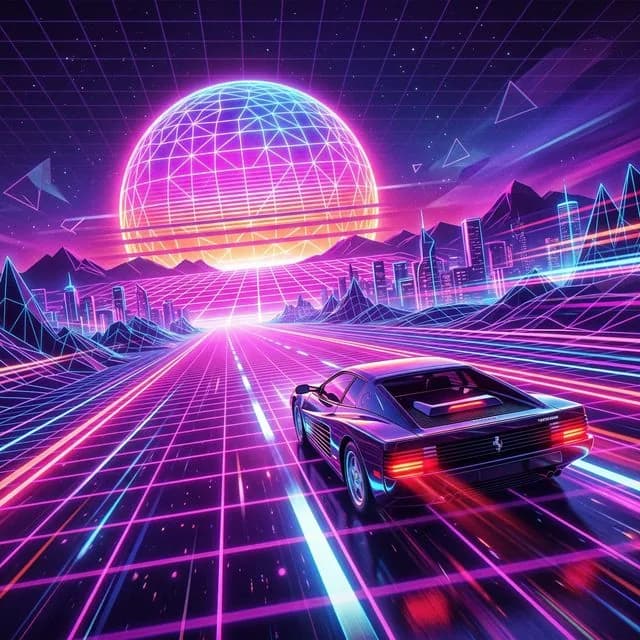
Retro Synthwave Sunset
Vibrant neon color palette, glowing bloom effects, sharp geometric shapes
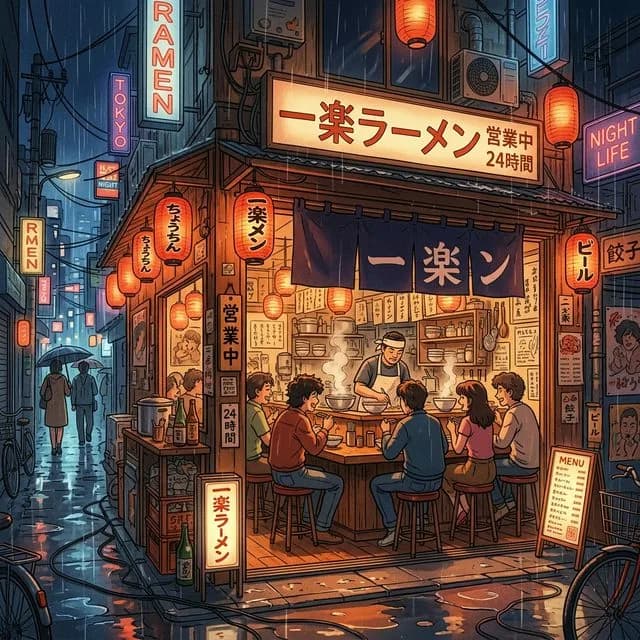
Tokyo Night Slice of Life
Cell shaded, soft glowing outlines, nostalgic atmosphere, rich colors
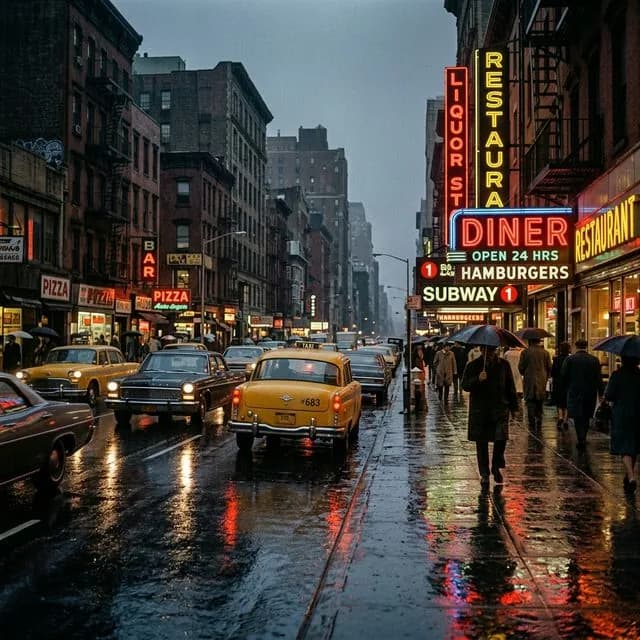
Vintage NYC Street
Film grain, vintage color grading, high contrast lighting, cinematic framing