Cozy Autumn Study Inspiration: Warm Library Nook
AI prompt extraction analysis for Cozy Autumn Study Inspiration: Warm Library Nook
Extracted Prompt Formula
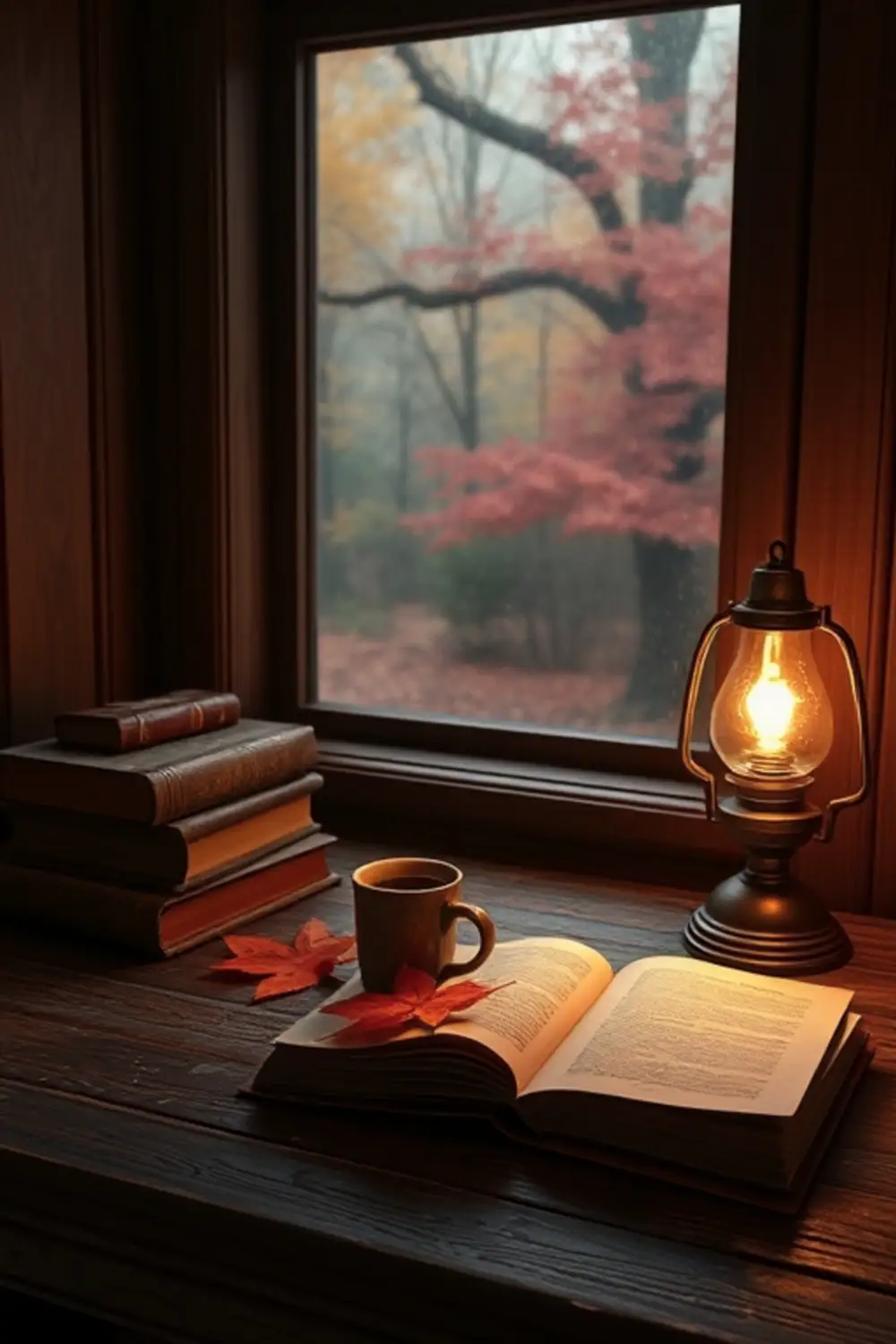
A cozy, dimly-lit autumn study nook nestled within an ancient, wood-paneled library. The scene centers on a sturdy oak desk cluttered with leather-bound books, a steaming ceramic mug of spiced tea, a lit brass oil lamp casting warm golden light, and a single, vibrant orange maple leaf resting atop an open manuscript. The window beside the desk frames a misty, rain-soaked autumn forest with trees ablaze in crimson and amber. Volumetric lighting filters through the rain-streaked glass, creating soft, dreamy beams. Hyper-detailed textures: the grain of the wood, the worn spines of books, the delicate veins of the leaf, and the condensation on the window. Shot on a 35mm lens at f/1.4, shallow depth of field, cinematic composition, award-winning photography, 8k resolution, Unreal Engine 5 render, octane render, ray tracing, photorealistic, atmospheric, evocative, moody, warm tones, amber and russet color palette, soft bokeh, cozy, hygge, autumn vibes. --ar 2:3
Core Variables
Detected Parameters
About this AI Generated Image Prompt
A brass oil lamp and a rain-soaked window are competing for the same job in this scene, and only one of them can win. The lamp is a small warm point source sitting on the desk; the window is a large exterior source described as opening onto mist and rain. The prompt then asks for volumetric light filtering through the glass in soft, dreamy beams, but beams require a bright directional sun, and a misty, rain-soaked forest is a diffusion box. Overcast rain light does not shaft. The physically real version of what this wants is a break in the weather, low sun beneath a clearing edge with the air still full of water, which produces exactly those beams and keeps the mist. Write that, or drop the beams and let the lamp own the room. The palette instruction hides a subtler trap. Amber and russet are specified, and the negative prompt bans cold tones, so nearly every pixel lands in the same warm band. Warmth, however, is perceived relatively: a scene reads as warm because something else in the frame is cool. The window is the natural cold anchor, since daylight through rain is blue-grey, and excluding cold tones removes the one comparison that would make the lamp's glow feel hot. That is the difference between a golden image and an image of a golden light in a room. The negative list carries an internal conflict as well. It bans blurry while the positive asks for a 35mm lens at f/1.4, shallow depth of field and soft bokeh. Those are the same visual quantity described approvingly and disapprovingly, and in any pipeline that honours the negative you should expect the background to tighten and the bokeh to shrink. The paired empty and cluttered mess exclusions are better judged: together with cluttered in the positive they bracket the desk toward controlled abundance rather than chaos. The edit with the most effect is to change the window line to flat blue-grey rain light and delete cold tones from the negative, keeping the lamp as the only warm source. The amber reads hotter against that cool rectangle than it ever does against more amber, and the orange maple leaf on the open manuscript becomes the most saturated point in the frame instead of one warm object among many.
Want to reverse-engineer a look like this from your own image? Try the free Image to Prompt tool to pull an editable prompt from any picture in seconds.
Want to extract prompts like this?
Try the AI Image DescriberRelated AI Prompts
Explore more extracted prompt formulas from our gallery.