Minimalist Pastel Dreamscapes: Cotton Candy Cloudscape
AI prompt extraction analysis for Minimalist Pastel Dreamscapes: Cotton Candy Cloudscape
Extracted Prompt Formula
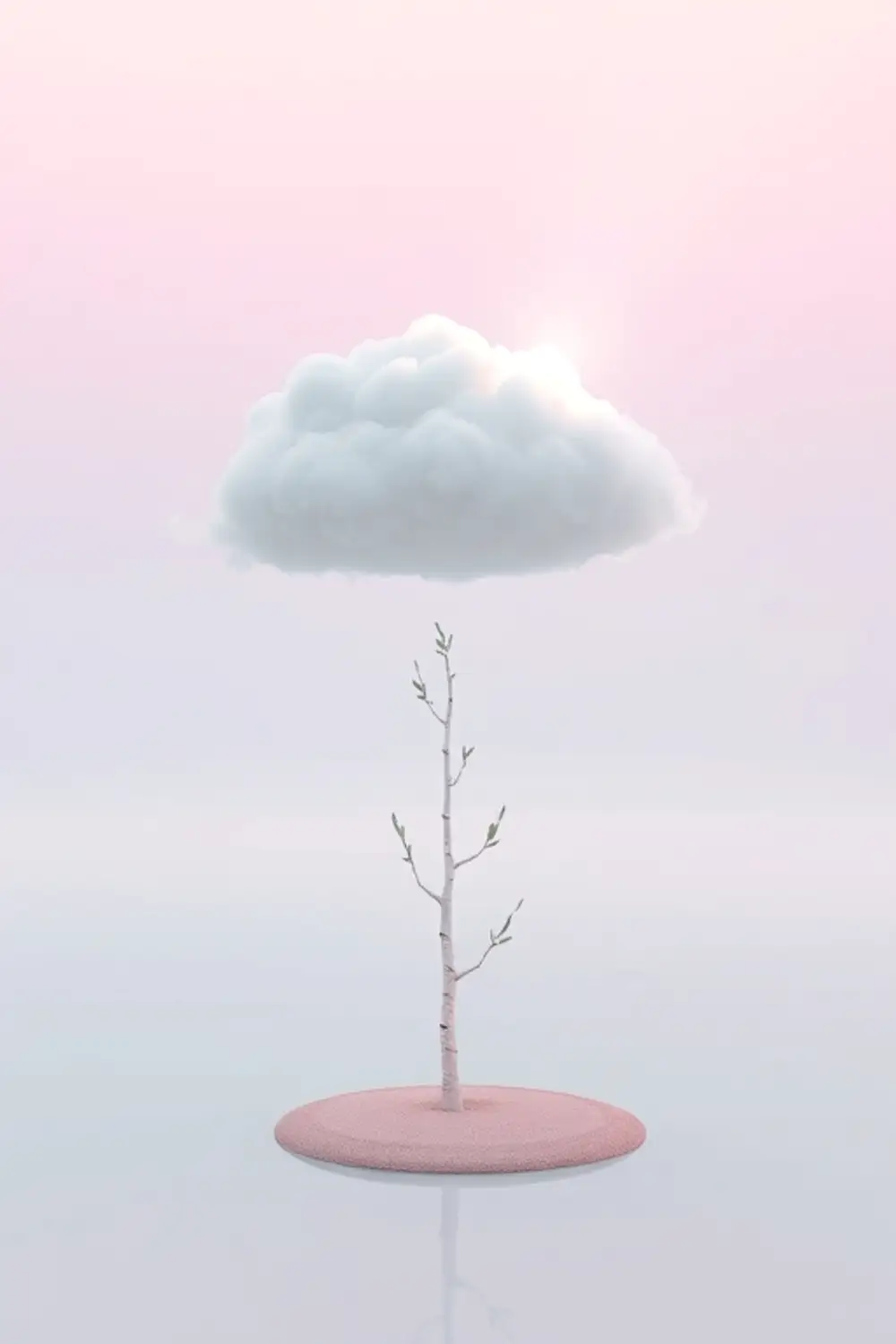
A serene, minimalist dreamscape featuring a vast, soft gradient sky of pastel pinks, lavender, and baby blue, transitioning into a calm, mirror-like lake of pale aqua. Floating at eye level, a single, oversized cotton candy cloud, impossibly fluffy with delicate, translucent wisps, casts a gentle shadow on the water. In the foreground, a solitary, slender white birch tree with a perfectly smooth, ivory trunk and a few tiny, mint-green leaves, stands on a small, circular island of blush-colored sand. Volumetric rays of warm, golden light pierce through the cloud, creating a subtle lens flare. Hyper-detailed textures: the cloud's airy, fibrous structure, the tree's fine bark lines, and the sand's granular sparkle. Cinematic composition with a shallow depth of field (f/1.4), focusing on the cloud and tree, while the background softly blurs. Award-winning photography, 8k, Unreal Engine 5 ray tracing, octane render, ethereal and tranquil mood --ar 2:3
Core Variables
Detected Parameters
About this AI Generated Image Prompt
The aperture is the detail worth arguing with first. An f/1.4 depth of field is measured in centimeters at close range and stays shallow well beyond that, yet the prompt asks it to hold two subjects sharp at once: a birch tree standing on an island in the foreground, and an oversized cloud floating at eye level somewhere past it. Those are at very different distances, so one of them will be soft. If the tree is the point, keep f/1.4 and let the cloud become a pale wash, which is arguably the more atmospheric outcome. If both need definition, f/5.6 costs almost nothing in dreaminess here, because the softness in this scene is coming from the pastel gradient and the volumetric rays, not from the lens. The negative list holds the sharper conflict. It blocks realism, photorealism and complex scenery, while the positive prompt asks for award-winning photography, hyper-detailed textures, a granular sparkle in the sand, Unreal Engine 5 ray tracing and an octane render on top of that. A photograph, a game-engine render and an anti-realism instruction are all competing for the same pixels. It is also worth knowing that a stock Flux pipeline has no negative-prompt channel and no use for a Midjourney-style --ar token, so on that model this entire block of protection may never be applied at all, and the softness would be coming from the positive words alone. Either way you lose: if the negatives are ignored, they cost you nothing but also protect nothing; if they are honored, they cancel the photographic instructions you paid for. What genuinely works is the water. A mirror-flat lake under a single floating object is a strong minimalist device, because the reflection doubles the subject and gives the pastel gradient somewhere to repeat, which is how a nearly empty frame still reads as composed. The circular island reinforces it, since a closed geometric shape reads as intentional in a way a ragged shoreline does not. A change to try: drop "Unreal Engine 5 ray tracing, octane render" entirely and add "matte painting, flat pastel gouache, no specular highlights." That settles the medium conflict in favor of the mood the rest of the prompt describes, and the cloud's translucent wisps survive untouched, because they were never a rendering feature. They were a description of the subject.
Want to reverse-engineer a look like this from your own image? Try the free Image to Prompt tool to pull an editable prompt from any picture in seconds.
Want to extract prompts like this?
Try the AI Image DescriberRelated AI Prompts
Explore more extracted prompt formulas from our gallery.