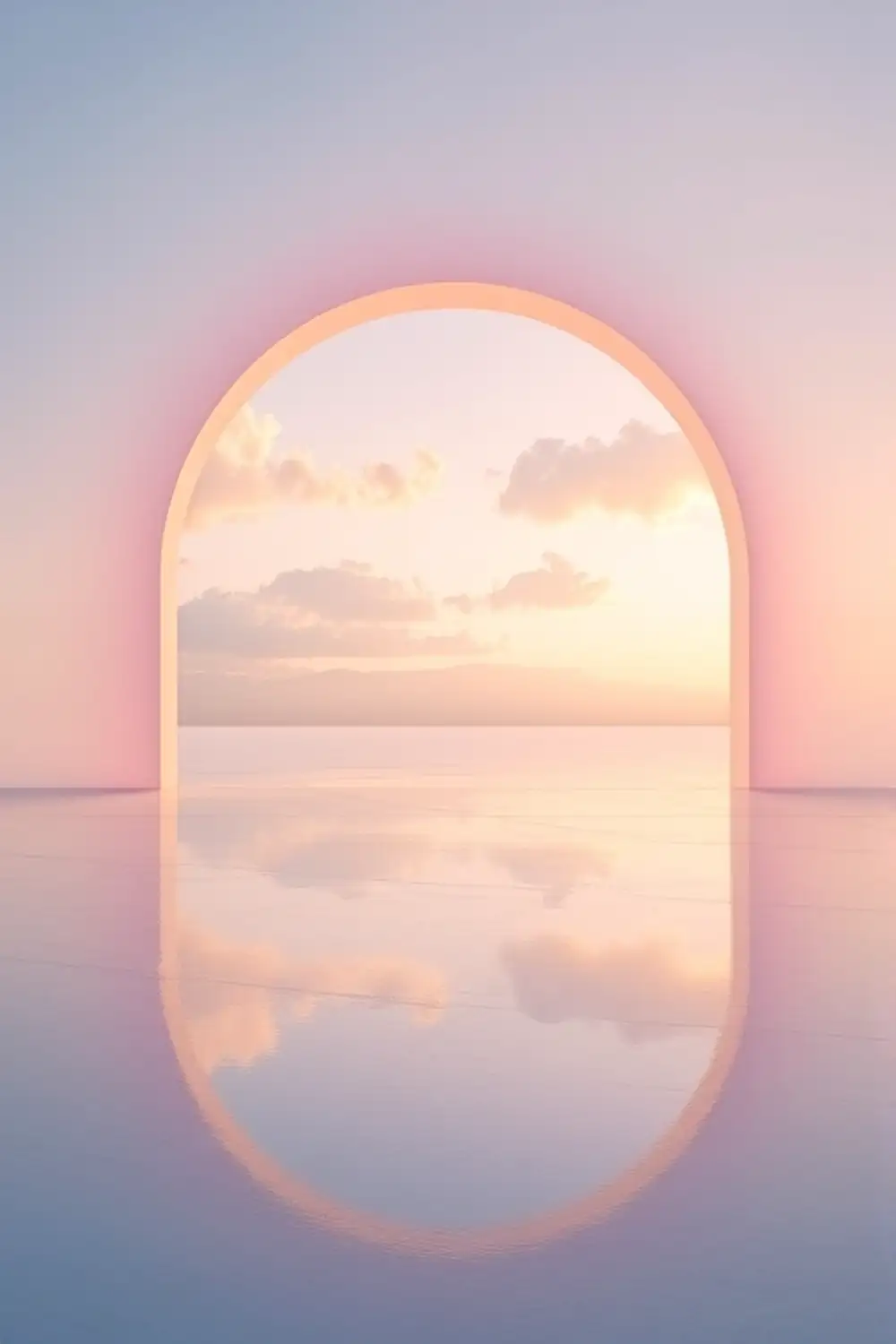
Minimalist Pastel Dreamscapes: Ethereal Cloud Arch
AI prompt extraction analysis for Minimalist Pastel Dreamscapes: Ethereal Cloud Arch
Extracted Prompt Formula
A colossal, minimalist archway made of semi-translucent, frosted pastel glass—shifting from soft lavender to pale peach—stands alone on an infinite mirror-like salt flat. Inside the arch, a dreamlike vortex of cotton-candy clouds swirls with subtle iridescence, revealing a distant, misty mountain range. The scene is bathed in the soft, diffused light of a perpetual sunrise, casting long, delicate shadows. Shot with a Hasselblad X1D II 50C, 90mm XCD lens at f/2.8, focusing on the intricate refraction and caustic light patterns within the glass. Hyper-detailed volumetric lighting, Unreal Engine 5 render, octane render, 8k resolution, cinematic composition, award-winning architectural photography, soft pastel color palette, minimalist aesthetic. --ar 2:3
Core Variables
Detected Parameters
About this AI Generated Image Prompt
Medium format changes what the numbers mean, and this prompt names enough hardware to be checked. The X1D II 50C carries a 44 by 33mm sensor, so the 90mm XCD frames roughly like a 71mm lens on full frame: a short telephoto, close to normal, with mild compression rather than the strong flattening a genuinely long lens would give. Its f/2.8 behaves like about f/2.2 in depth-of-field terms on that format, shallower than the number suggests. Pointed at a colossal archway framed whole, though, it still yields near-total depth, since holding a structure that size in frame means standing well back from it. The aperture is not blurring anything meaningful; it is signaling where attention should sit, on the refraction inside the glass. That is a legitimate use, but if you wanted the flat to fall away into softness the camera would have to be much closer. The lighting instruction cancels itself. Soft, diffused light and long, delicate shadows do not coexist: shadow length comes from a low sun, shadow softness comes from a large or heavily scattered source, and a source broad enough to be soft washes the shadow out before it can get long. What the scene actually wants is a low sun behind thin haze, so the shadows stay long and directional while their edges feather. Written that way, the model knows which property matters at which end. The negative list, wherever it is honored, works against the best idea in the prompt. Caustics are by definition concentrated light: a curved transparent surface focuses rays into bright bands that read only because everything around them is darker. Banning high contrast and harsh shadows removes the very condition that makes caustics visible, so the refraction patterns come back as faint tinting on the salt. The entries "kitsch," "cliche," "mundane" and "boring" in that same list have no visual referent at all; they name a judgment rather than a thing to avoid. One substitution: replace "harsh shadows, high contrast" in the negative with "lens flare, chromatic aberration," then add "bright caustic bands pooling on the salt directly beneath the arch." The palette stays soft, because it is set by the frosted glass and the sunrise rather than by contrast, and the light finally has permission to concentrate. The mirror-like flat then repeats those bands back, which is the one thing an infinite empty ground is good for.
Want to reverse-engineer a look like this from your own image? Try the free Image to Prompt tool to pull an editable prompt from any picture in seconds.
Want to extract prompts like this?
Try the AI Image DescriberRelated AI Prompts
Explore more extracted prompt formulas from our gallery.